Since leaving my part-time job, I've been listening to the morning livestream of Ryo, the head of the YouTube channel "Liberal Arts University" (Libe-dai), almost every day.
On one of those streams, the topic turned to the string of data leaks at various companies, and the possibility that Chinese AI models might be involved.
I use ChatGPT, Claude and Gemini every day, and I'm constantly amazed by how capable they are. But there's a flip side: scam emails and texts that I used to spot because of their awkward language now read so naturally that nothing feels off. Scams have become far more sophisticated.
📋 What you'll find in this article
The story I heard on the livestream: ¥2 million lost through online banking fraud
Phishing and online banking fraud in Japan, by the numbers
The scam emails and texts I've received, and how AI has changed them
Three simple safeguards from Libe-dai, plus what I do on top
What to do right away if you've entered your details on a fake site
¥2 million lost — a story from the livestream
One viewer asked for advice on air: after falling for a phishing scam, their online bank account had been accessed several times, and they had lost ¥2 million.
In the end, the bank agreed to refund 75%. Ryo commented that getting 75% back was, if anything, on the better side.
25% of ¥2 million is ¥500,000! For an office worker, that's one to three months' pay or more. Based on what I used to earn from my part-time job, it's close to half a year's income.
I learned about money from Libe-dai too, started managing our household budget, and moved our savings into online banks. This story didn't feel like someone else's problem at all.
Phishing and online banking fraud by the numbers
Period
Phishing reports
Online banking fraud
2025 (full year)
2,454,297
approx. ¥10.4 billion (4,747 cases) a record high
2026 (Jan–Jun)
approx. 730,000 (down about 40% from approx. 1.19 million)
approx. ¥2.07 billion (253 cases) down 51% year on year
Source: National Police Agency of Japan and others
The number of cases has dropped considerably, but the losses are still far from small.
When the National Police Agency analysed about 360,000 phishing emails, the most common country for the sending servers was China, followed by Japan and Brazil.
The main entry points for phishing are links in texts and emails. Japan's Financial Services Agency also warns that most online banking fraud starts with emails, texts or messaging apps that lure people to fake login pages and steal their IDs and passwords.
Scam emails and texts I've received
A romance scam A message from a wealthy-looking, handsome company president I'd never met, saying he wanted to meet me. Who on earth are you? Creepy! I deleted it straight away.
A "glamour" scam A message with a photo of a very alluring young woman. If I were a man, I might have fallen for it (lol).
A lottery win — for a ticket I never bought From overseas, saying I could receive the full prize if I sent money first. How do you win a lottery you never entered? I ignored it.
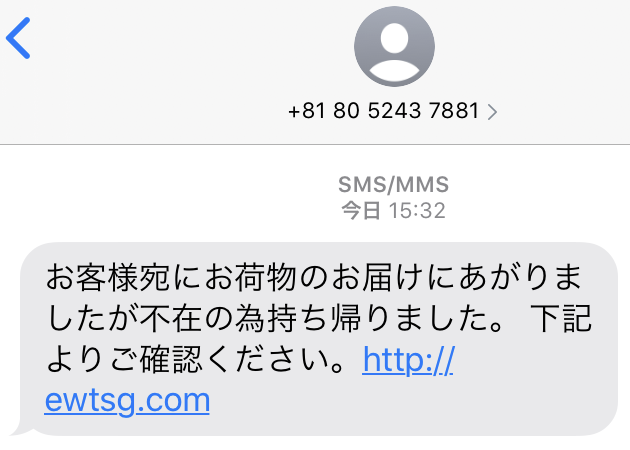
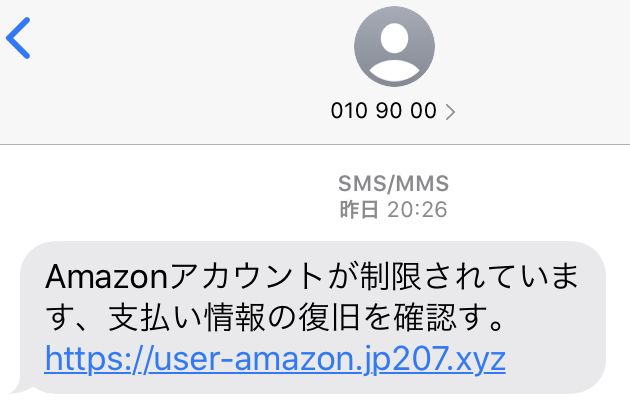
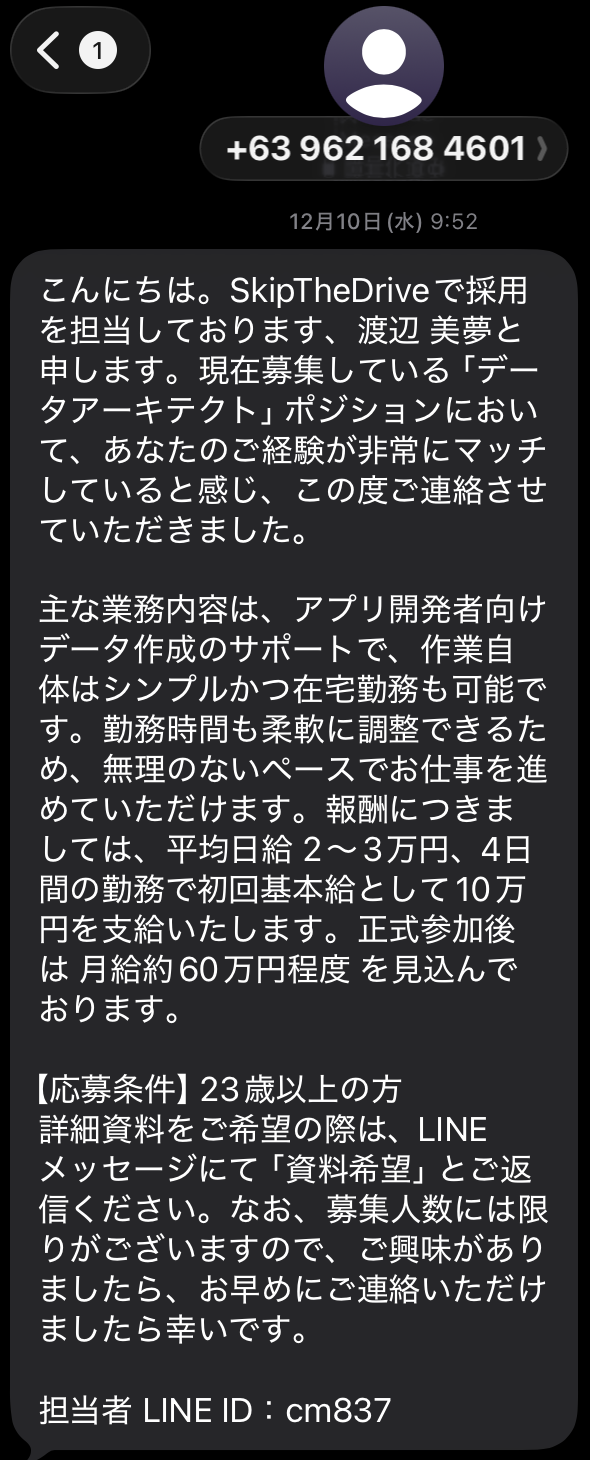
Text messages These are what I get most often lately: missed-delivery notices, requests to update personal details from shopping sites, job offers, and more.
A job-offer scam text I received. The Japanese is completely natural and polite; the red flags are the too-good-to-be-true pay and the push to move to LINE.
Scams that AI has made hard to spot
Old scam emails had plenty of red flags, like unnatural sentences, that helped you tell real from fake. With the rise of generative AI, the writing has become much more natural and much harder to judge.
There are also "real-time" phishing schemes that get past two-step verification on the spot, and "voice phishing," where callers pretend to be bank staff, get your email address or account details, and then send a text or email that leads to a fake site.
Libe-dai's answer was simple: three safeguards
🛡️ Three safeguards
Move your email to Gmail. It's free, and it's designed to keep junk mail like phishing emails out of your inbox.
Don't open links in emails or texts.
Stop reusing passwords by using a password manager such as 1Password.
On top of that, I've turned on transaction alerts and set my online bank's transfer limit to the minimum. Whenever I need to send more, I have to lift the limit and then set it again. It's a bit of a hassle, but when it comes to protecting your savings, you can't complain about a little hassle.
If you've tapped a link and entered your details
⚠️ Act right away
Call your bank immediately (find the number on your card or the official website — never in the text)
Change your password
Contact the police
Keep a record of what happened
Whether fraud losses are refunded in full or only in part seems to depend on the circumstances of each case. The viewer on the livestream may have been judged partly at fault.
Summary
To keep protecting our savings, I think we'll need to keep updating our safeguards too. Let's make sure the money we've worked so hard for doesn't slip away.
* Compensation depends on each bank's rules and the circumstances of each case. Information as of October 2026.